ORIGIN DOWNGRADING

With the downturn in the Electricity market, most companies are finding it hard to make a profit. As a sign of things to come Origin Energy has downgraded its guidance for full-year profit.

Previously, Origin had highlighted it was partially insulated from the impacts of the Electricity market downturn. However, following a ruling on a gas dispute with Beach Energy, this has resulted in Origins gas supply costs increasing by up to $40M this financial year, then increasing to $80M the following year. The dispute occurred due to Origin and Beach Energy not being able to agree on pricing under the contract which is reviewed every three years.

Origin has previously amended its guidance for gross earnings to $1.14B, with earnings expected to be $1.02B. As a result of this news, shares in Origin dropped 4.5%.

Beach Energy is a major supplier of gas to Origin.  The gas pricing determination will affect the cost of gas and impact the profits from Origins network of end users and power generation assets.
Origin’s coal fleet profits have been impacted as wholesale prices fall. Origin was hoping gas would be the solution to it’s drop in profits. Chief Executive Frank Calabria said the company is “disappointed in this decision which we believe is wrong and entirely inconsistent with our prior experience in the gas market”. “This will result in a gas price that does not reflect market prices, and it is therefore a very poor outcome.”

Origin will still benefit from the performance of Australia Pacific LNG which Origin owns 37.5% of and is expected to return cash distribution of $650M.

Origin guidance of “challenging” conditions in energy markets remain unchanged and expect returns not to improve in its electricity and gas businesses until the 2022 financial year

CARBON PRICES INCREASE

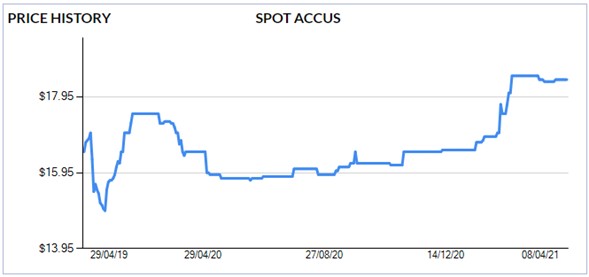
As the next round of auctions are set to take place under the Emissions Reduction Fund, prices for Australian Carbon Credits (ACCU) have increased steadily since January and are now trading at $18.40 per certificate, 10% higher than in January.

The growth in the ACCU market is partially from the Federal government’s Safegaurd mechanism, but also due to an increasing number of companies implementing zero emission targets and using ACCU’s to offset their emissions.

As more companies choose to aim for a net zero emission position, the supply / demand balance in the ACCU market has shifted and the price of the commodity is increasing. Some forecasts predict ACCUs could reach as high as $45 per certificate by 2030.

The biggest jump in the price for ACCUs was recorded in February when the Prime Minister endorsed a net zero target by 2050.

As highlighted in previous articles, many companies are responding to shareholder pressure to reduce emissions and decarbonise.  The European market, Emissions Trading System (ETS), a block of 27 countries, has seen EU carbon permits jump from €23 in November to €41 in March.  They were trading closer to €5 only two years ago. The price increase has been the result of the EU’s tougher climate change policies.

Large emitting companies had until February 2021 to purchase their ACCUs to comply with their Safeguard liabilities, hence the  increases in price. However as seen from the chart above the prices of ACCUs has remained high. This leads to the assumption that voluntary purchases of ACCUs are maintaining upward pricing pressure.

Across Australia, large emitters such as AGL have been joined by large energy users including the Coles Group and Woolworths to commit to net zero greenhouse gas emissions by 2050. Other large gas and petrochemical exporters have started to sell carbon neutral LNG and other carbon neutral products, this is achieved by carbon offsets such as ACCU’s.

As the demand for carbon offsets increases the ACCU price is likely to continue to rise until cheaper abatement solutions develop such as improved farming practices resulting in improved soil carbon storage and broad acre management such as Savanna burning.

Common to all markets, the offset market is currently in a state of flux.  Demand will most likely increase the price of ACCUs while new project and pressure from international carbon offsets will put downward pressure on prices. The positive takeaway is businesses are clearly proactively moving to reducing their carbon footprint.

What are you doing to reduce yours?

EDGE IS HELPING BUSINESSES TO STEP UP THEIR CLIMATE EFFORTS

The world is changing……………………. you only had to look out the window this week, to see the impacts of this.

No matter how you think it is occurring or who you think is contributing to it, climate change is real.

Over the last decade it has been more evident that Australia is being impacted by climate change. We have seen higher temperatures, worsening droughts and most recently parts of Australia have been impacted by the worst floods in a decade.

Australia has always been affected by extremes in the weather, but science shows the impact and regularity is increasing.

At Edge part of our role is to advise our clients on how to best manage risk. This is not always financial risk as most people would assume but, indirectly climate risk. This is the biggest risk many companies are facing, and this directly relates to financial risk.

Investors are starting to push companies to align their operations towards emission reduction targets and the use of sustainable practices. Many companies across Australia are pledging to reduce emissions to ‘‘net zero’’ by 2050 however, many do not have a clear strategy to reach this target.

Edge has and is currently assisting our clients with the development of low carbon business models.

When investors are weighing up the performance of a company, they are now allocating more weighting to how the company manages it sustainability.

Edge works with a range of clients including, some of the largest mining and utility companies worldwide and over the last couple of years we have developed strategies to decarbonise their businesses.

The procurement of renewable energy is just one way in which Edge is assisting clients.

We have developed sophisticated mechanisms to provide the client with access to:

  • renewable energy
  • environmental certificates
  • emission offsets

and……………..we are still able to manage the price risk and uncertainty in the energy market.

WHO WERE AUSTRALIA’S TOP EMITTERS?

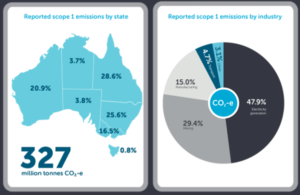
Last Thursday the Clean Energy Regulator (CER) published the latest National Greenhouse and Energy Reporting (NGER) data outlining the largest 400 emitters across Australia.

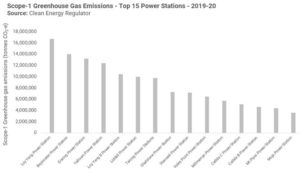
As expected, Australia’s energy companies ranked highest in the list with AGL leading the list, with greenhouse gas emission reported as 42.2 million tonnes of scope-1 emissions for 2020 financial year. AGLs emitter was more than double that of the second highest emitter Energy Australia, at 17.9 million tonnes.

Other high emitters included:

  • Origin Energy with 16 million tonnes
  • Stanwell Corporation and CS Energy emitting a combined 30.3 million tonnes.

Following the list dominated by thermal generation came the oil and gas producers.

  • Chevron Australia emissions equaling 10.2 million tonnes
  • Woodside Petroleum reported 9.2 million tonnes
  • Santos emitting 7.3 million tonnes

As AGL owns the oldest and dirtiest power stations due to the fuel they burn, it is not surprising they top the list of emitters with 8% of Australian greenhouse gas emissions.

AGLs largest emitting stations was the brown coal fired Loy Yang A coal power station with 16.7 million tonnes and Bayswater Power Station at (14.0 million tonnes), which burns black coal.

With the release of these results, it will put increased pressure on the retailers to clean up their generation by moving towards renewable generation.


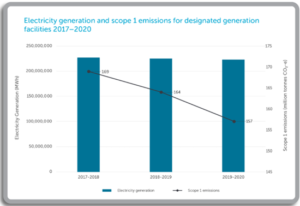
Emission reductions have changed across various sectors in the 2019-20 year, which was mostly due the impact of COVID-19 however as seen below the electricity generation sector had continued a historic trend of reduced emissions due to the higher penetration of renewables.

Emissions from the electricity sector dropped by 7.5 million tonnes compared to the previous year. Emissions from the oil and gas sector dropped by 3.4 million tonnes as result of reduced venting and flaring of gas.

What is the spot market and the spot price?

Understanding the spot market and spot prices is fundamental to understanding how much you ultimately pay for electricity.

The National Electricity Market (NEM) operates as a ‘spot market’.  This means that supply and demand are matched instantaneously, and generators are paid a spot price for the energy they generate in any given period.

The Australian Energy Market Operator (AEMO) manages the spot market, balancing supply and demand in real time. With the safe delivery of energy the priority, AEMO controls a number of physical aspects of the market which ultimately impacts which generators are dispatched, and what spot price is achieved.

AEMO provides the market information regarding how much demand is expected. Generators compete to supply this energy by providing a bid stack to AEMO that ultimately tells the market operator how much energy they are prepared to generate for a given price. AEMO aggregates all the bid stacks from cheapest to most expensive, manages the physical requirements of the system (which stands to impact some generation with constraints, ancillary services, interconnector flows, etc.), and sets the spot price in a region at the lowest price where actual demand intersects the relevant bid stack. . All supply at and below this level is required to generate and will be paid the spot price.

Supply and demand is physically managed by AEMO varying the market in 5-minute dispatch intervals. For the purpose of financially settling the spot market, it is done in 30-minute trading intervals (an average of the six 5-minute dispatch intervals). This means the spot market currently operates in a way that physical dispatch and financial settlement are determined over different timeframes. The market was designed in this manner to incentivise slow ramping thermal generators and large users to benefit from changes to load up to 25 minutes after the price signal has been sent.

The spot market and the setting of spot prices is highly complex and governed by stringent rules for both bidding and dispatch processes (all of which go well beyond the high-level principles outlined in this article). Despite this, the dispatch and settlement timing mismatch has led to disorderly bidding practices whereby generators have been accused of ‘gaming’ the market. The Australian Energy Market Commission (AEMC) determined that in the long-term, the pricing anomaly may lead to inappropriate investment and higher prices for consumers.

Consequently, in a move to further enhance the market, from 01 July 2021 the market will start to move to 5-minute spot pricing. This means dispatch and financial settlement will be aligned, disorderly bidding will be managed, and fast response technologies such as batteries will be rewarded.

Reliability and Emergency Reserve Trader Scheme

The Morrison Government have again distorted the Electricity market when Angus Taylors office announced it was intervening to pay Victoria’s Portland aluminum smelter in Victoria nearly $80 million to act like a “giant battery” in the Reliability and Emergency Reserve Trader (RERT) scheme.

The announcement surprised the market and means that Portland will be the only provider of RERT services. They will be paid just to be on standby to deliver emergency power reserves.

The intervention was announced on Monday under the veil of securing Victoria’s energy system, while subsidising the Alcoa owned smelter with guaranteed revenue, with up to $76.8 million of RERT revenue over the next 4 years.

The short term solution to Energy security in Victoria will cease in 2025 when new electricity market reforms are expected to be in place.

Under Australian Energy Market Operator’s (AEMO’s) RERT mechanism, RERT participants are paid to reduce demand at times when the supply / demand balance become tight, but only pays if parties participate. In the Portland cases they will get paid to just be on standby.

This year AEMO is seeking 1,600 Megawatt (MW) of RERT, apart from the guaranteed money going to the Portland smelter. RERT will not cause market participants anything unless it is activated.

In the 2020, AEMO published the Electricity Statement of Opportunities (ESOO). AEMO commented that it was highly unlikely that Portland’s services will be called upon this summer, due to the additional generation in the region from wind and solar.

Smelters are well placed to provide long duration outages. Other industrial processes like mineral processing are best suited to short duration outages. It is understood, in return for the guaranteed revenue, the RERT agreement means the Portland smelter will participate to the maximum extent possible. This is likely to include the smelter being shut down for an extended duration,  most likely during the highest stressed times of the year.

The Portland smelter and other smelters in Australia are struggling to remain competitive on the world stage. The Portland smelter has received around $1.1 billion of subsidies from the Victorian Government since 2017 and a $40 million interest free loan from the Federal Government.

Market participants have raised their concerns over the government’s intervention, highlighting that it has distorted the pricing and availability of RERT available to AEMO. Other concerns are that it may encourage other smelters such as Tomago in NSW and Boyne smelter in QLD to seek similar payments.

The Clean Energy Council released it latest renewable investment confidence survey and a key concern named federal government market intervention as one of the turn-offs for prospective large-scale wind and solar developers.

What is a VPP?

Many of you would have seen the acronym VPP floating around the energy industry, in AEMO documents and publications like the Integrated System Plan (ISP). So, what is a VPP? A Virtual Power Plant (VPP) is basically an aggregation of resources. These can be generation, storage and controllable load from decentralised sources.  All being coordinated to deliver services to the power grid including electricity, FCAS and other power system services.

Last week battery manufacturer Sonnen reached the magic threshold of 1MW to operate in the National Electricity Market (NEM) and plans to operate a VPP.

The German based company, Sonnen, now owned by Shell, has built a network of customers to allow their Sonnen branded home batteries to participate in the company’s new virtual power plant.  This has been designed to provide frequency control services. The customers will receive a financial benefit through cash payments. Sonnen’s new program will also provide grid stability services.

The VPP branded, sonnenConnect is Sonnen’s first VPP worldwide.

Each Sonnen battery will not be heavily relied on due to the nature of the VPP aggregating all outputs. To operate in the FCAS market, each household will only be required to supply 4kWh of energy to provide the essential grid stability services.

To be eligible to participate in Sonnen’s VPP and rewards program, households will need to have one of Sonnen’s batteries installed, with at least 4kWh of capacity. No additional equipment will be required to allow batteries to participate in the program as Sonnen batteries incorporate the necessary control systems.

Sonnen has chosen Australia to launch its VPP products as Australia is more open to the establishment of VPPs, along with the high uptake of battery storage system installations compared to other parts of the world.

“With the growing uptake of rooftop solar and home batteries globally, utilities are recognising the importance of home batteries in Frequency Control Ancillary Services (FCAS) or what is known as demand response, to stabilise the grid when there is a surge in the demand for electricity”, Nathan Dunn, Sonnen Australia CEO said.

He also said “through sonnenConnect, we are rewarding customers who are providing us access to their Sonnen Battery when needed for demand response. Not only will they enjoy being energy independent, Sonnen Battery owners are working together as a community to stabilise the energy grid that connects millions of homeowners in the National Electricity Market.”

Sonnen has established a manufacturing facility at the former Holden factory in Adelaide. This allows Sonnen to be branded Australian made. They plan to use the Australian facility to produce other components and software for the energy industry including electric vehicle charging units.

Electric Vehicle’s to Power the World

Greenpeace have published a report outlining that batteries from Electric Vehicles (EVs) could meet the worlds energy storage requirements. The report highlights the problems emerging from decommissioned lithium-ion batteries out of EVs.

The report also examines the impact of the growing EV sales across the world will have on the supply chain Ore that is mined to produce the minerals to then produce lithium-ion batteries.

There are critical supply chain risks for primarily the lithium and cobalt required for the batteries. Countries like China, South Korea and Japan manufacture 85% of the worlds EV batteries however do not have the large quantities of raw materials available locally.

It is forecast that over the next 10 years the global Lithium battery market will expand at such a rate that 30% of the worlds Cobalt reserves will be exhausted. During the same time 10.35 million tonne of lithium, cobalt, nickel, and manganese will be mined.

EV batteries are replaced once their usable capacity drops below 80%, this normally occurs within 5-8 years from manufacture. Although not useful in EVs, the batteries can be repurposed to meet other needs.

The report finds that repurposed EV batteries could cover all global demand for energy storage in 2030, calculated to be around 368GWh of capacity.

Decommissioned EV batteries could be repurposed and used as backup power systems in telecommunication infrastructure and data centres. They can also be used for energy storage devices across the National Electricity Market (NEM) and remote area power supplies.


Written by: Alex Driscoll, Senior Manager, Markets & Trading

Green Star Building Rating Reject Gas

In a major overhaul of the Green Building Council of Australia’s (GBCA) Green Star rating system, Australian buildings hoping to achieve the gold standard for sustainability will now have to ditch gas.

For buildings to achieve the highest 6 star rating, the building will be required to be fossil fuel free and 100% renewable powered.

The Green Star rating system was launched by the GBCA in 2003 as an independent and voluntary certification system that assesses the sustainability of construction projects across all stages of their life cycle.

Green Star rated buildings have been recognised as having a higher standard of sustainability and energy efficiency than buildings that meet the National Construction Code.

The industry has supported the need to eliminate carbon emissions from buildings and construction to meet obligations under the Paris Agreement, this has resulted in the new focus.

Atlassian, the company behind energy-savvy billionaire Mike Cannon-Brookes has signed on to use Green Star Buildings for its flagship new Sydney headquarters.

The new ratings will push for electrification however emerging technologies, such as green gas will be beneficial to reaching the higher standards as it aligns with Australia’s goals in energy transformation and emissions reduction.

Quarterly Report – Q320

Here at Edge Utilities, we specialise in delivering enterprise buying power to businesses, Strata and Body Corporates. The Edge Utilities Quarterly Report is a resource that educates you more about the energy and utilities market, in turn, helping you. The report consists of an educational segment, market information (such as movements and forward fundamentals), and the occasional profile piece.

In this report, we will look at the National Electricity Market (NEM) and what factors impacted pricing and demand in the second quarter of 2020 (Q320). The impact of which COVID-19 had on Q320, has only been modest in respect to demand. Q320 saw the lowest wholesale electricity and gas prices in the National Electricity Market (NEM) since 2014. Some of the key drivers behind this result included:

  • East coast wholesale gas prices averaging $3.85/GJ, down from $9.75/GJ in 2019
  • Changes in the generation mix
  • Power system security concerns
  • Operational demand continuing to fall
  • Spot prices dropping
  • Falls in Electricity futures
  • Weather

Also featured in this report, is an article on the benefits behind using a broker or consultant.

Are you ready to Re.Think your utilities contracts to save money and get better value?

Download a copy of the full Q320 Report here: Edge Utilities – Quarterly Report – Edition 2


To keep up-to-date with Edge Utilities, connect with us on LinkedIn: https://www.linkedin.com/company/edge-utilities/