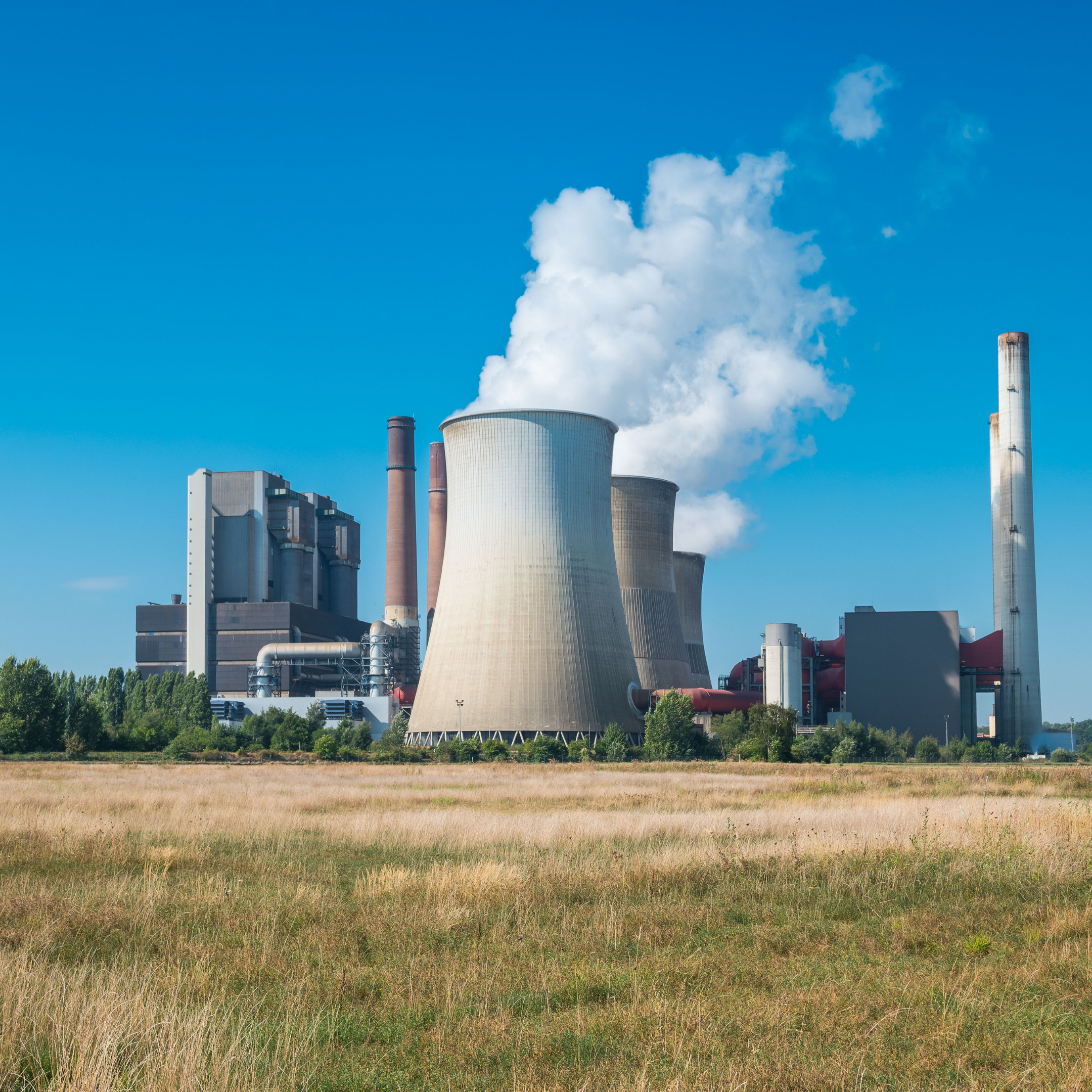
Federal and State Government agree to power bill

Last Friday National Cabinet met and agreed on the states introducing a cap on wholesale gas and coal. The temporary cap will be set at $12/GJ for gas and $125/t on coal and will not be enforced on export contracts, therefore not limiting the opportunities for high international prices.

During the meeting it was agreed that the states would sort out the coal cap and the Federal Government would change laws to legislate the $12/GJ cap on domestic gas. As the caps are focused on the domestic market, they will only have a small impact on the profitability of producers. It is anticipated that only 4% of gas 10% of coal will be covered by the cap, the remaining volumes will be exposed to international markets. As the states have been tasked with implementing the cap it is likely they will go down different routes to achieve the same outcomes.

The simplest state to implement the changes will be Queensland as the government still owns and control 80% of the coal fired generation fleet. Queensland will likely use its direction powers and instruct its government owned corporations (GOCs) to dispatch the coal assets below specific prices, where NSW will likely use changes in law to cap the price.

As the cap mechanism will be used for uncontracted gas and coal, this may have limited impact on generators, as most of the coal and gas has already been produced under longer term contracts at a cost below the proposed caps. At this stage it is unlikely that the mechanism will be in place until February despite federal politicians being recalled to Canberra on Thursday to discuss the issue.

While the bill will get the support of the House of Representatives it is expected the Greens will put pressure on the government in the Senate to limit any compensation for the coal producers.

In line with the price caps, National Cabinet also discussed an assistance package to lower the impact on families and business as a result of high inflation and high commodity prices.

If you feel you need more control of your company’s energy spend, please reach out to discuss joining our Edge Utilities Power Portfolio (EUPP) where we use the power of bulk purchasing to help Australian businesses of all sizes save on their energy bills. Read more: https://edgeutilities.com.au/edge-utilities-power-portfolio/ or call us on: 1800 334 336 to discuss.  

Market operator develops road to renewables

Just a week after reporting on a slowing of renewable energy projects to an all-time low, this week the Australia Energy Market Operator (AEMO) has published the engineering roadmap that is required to get the NEM to 100% renewables. While the roadmap doesn’t guarantee the NEM will be powered by renewables 24 hours a day all year round, the roadmap is designed to allow the NEM to be powered by renewables for hours or days at a time.

The roadmap to 100% renewables raises new challenges including the variability of output from wind and solar generation and the change required to these technologies to work with a system designed for one-way electricity flow from large synchronous generators to firm the transition away from coal-fired generators.

For years the market has seen the potential for high levels of renewables to cause system problems, this is due to the variability of output causing large swings in spot prices and lower system strength leading to a less stable network.

South Australia is a world leader in renewable energy generation, and in order to maintain system security they use synchronous condensers which maintain inertia and in doing so improves system strength, allowing for higher levels of wind and solar to operate. The transition may require more synchronous condensers to maintain system security, however newer installations are integrating these technologies to provide a similar service which may mitigate the demand.

In addition, high levels of renewable energy puts pressure on coal generators. Forcing coal-fired generators to run at minimum load while they wait for anticipated higher prices over the evening and into the night. However, the longer the spot price remains lower during the day, coal-fired generators will need higher evening spot prices to break even. At some point, the economics will not add up, and the coal-fired units will be mothballed or permanently retired. The shutting down of coal-fired generators will require large amounts of storage for countries to achieve their renewable energy targets of 83% by 2030.

While coal-fired generation is the big loser in the new world, 100% renewables combined with storage will put a lower reliance on gas-fired generation for firming or covering the peak electricity needs during the day.

If you would like a strategy to ensure your company procures energy to support sustainability and growth in renewables  please reach out to discuss your options.  To save on electricity spend, you can also join our Edge Utilities Power Portfolio, read more: https://edgeutilities.com.au/edge-utilities-power-portfolio/ or call us on: 1800 334 336 to discuss.  

Why growth is slow in renewable energy

The Clean Energy Council (CEC) recently released to its members the quarterly renewable projects report, which showed only one renewable project, Stubbo solar farm, reached financial close in Q3 – 2022. Investment in renewables is at an all-time low where quarterly investment has dropped almost 60% to $418M. As well as project growth which has slowed by almost 30%, compared to Q2 -2022 and over 60% lower than Q3- 2021.

While politicians are talking up the prospects of a renewable energy driven industry to reduce the impact of climate change, the reality is, reaching the 44GW target outlined by the federal government may be hard to achieve at the current rate of growth.

A significant number of new wind, solar and storage projects need to come online. If these projects do not come online the retiring coal generators cannot be replaced and may be forced to remain in action.

While only one renewable project in Australia reached financial close last quarter, two projects completed commissioning and three new projects started construction during Q3- 2022. Currently there are 247 financially committed renewable projects in Australia, with 221 under construction and 169 undergoing commissioning.

The CEC notes that the desire to build new solar, wind, pumped hydro and transmission lines is meeting opposition from by local communities. Some examples being, Chalumbin wind farm in North Queensland is now reducing the number of planned wind turbines it is installing by half,due to the concerns from the local community. There are also concerns for the largest pump storage hydro project that the Queensland Government is planning to construct near Mackay, after locals have discovered the mega project has the potential to flood a local town.

With ambitious renewable targets being spruced by politicians and businesses actively seeking renewable energy to aid in the decarbonisation of their operations, the question of where and when these projects will be delivered need to be asked. The majority of people support the transition to renewables but obviously not in their own backyard.

Overview of the National Electricity Market (NEM) – Quarter 3, 2022

The NEM has experienced an unprecedented year of high electricity spot prices, recently Q322 averaged $216/MWh across the (NEM) which was more than three times higher than the same quarter in the previous year and close to matching the all-time high during Q222 of $264/MWh.

Many factors influenced the volatility and elevated spot prices including:

  • A tight supply / demand balance resulting from gas flow restrictions in Europe associated with the war in Ukraine
  • Australian weather events
  • An increase in demand
  • Generator bidding behaviours
  • A reliance on thermal generation (coal and gas fired)

Coal and gas prices are at all-time highs due to international demand leading to a high cost of generation. In turn increasing the underlying fuel cost for generators, contributing to the increase in spot prices. As little energy storage is currently installed in Australia, large swings in the output from wind also contributed to the volatility in the market.

Generators who want to sell electricity to the NEM must submit a bid detailing how much energy they would like to offer in ten different price bands. Recently a lower volume of generation has been available from coal due to bidding behaviour with participants withdrawing thermal capacity and intermittent generation like solar and wind taking a larger market share.

A lower capacity factor for coal generation has resulted in coal fired availability to move higher up the bid stack, resulting in coal fired generation needing to dispatch at higher spot prices to meet their long run average costs.

Weather influences such as La Niña and a negative Indian Ocean Dipole (IOD) event increased the likelihood of rainfall across the east coast of Australia this year. With September’s rainfall being the fifth highest on record across Australia. The cloudy and wet conditions impacted solar generation and the supply of coal to power stations resulting in higher fuel prices.

Demand from the grid has increased for the first time in Q322 since 2015 as households and businesses require more electricity from the grid due to rooftop solar not generating as much as previous years due to cloudy conditions.

If you feel you need more control of your company’s energy spend, please reach out to discuss joining our Edge Utilities Power Portfolio (EUPP) where we use the power of bulk purchasing to help Australian businesses of all sizes save on their energy bills. Read more: https://edgeutilities.com.au/edge-utilities-power-portfolio/ or call us on: 1800 334 336 to discuss.  

The state of the market – rising energy costs in today’s budget explained.

Up and up

The budget handed down last night by the Albanese government really did show that there will be “hard days to come”. The treasurer, although acknowledging the international pressures and increases of electricity prices, did nothing to assist with this increasing cost on households and businesses bottom lines.

So why are international pressures a driver for the electricity we use when we turn on our lights?

Well let’s start with a breakdown of what goes into our bill, a large customer will see this split into each section, but smaller businesses and households don’t, they are just rolled into a flat tariff.

There are 4 main components of the energy we buy:

  1. The physical electrons / energy we purchase
  2. The environmental subsidies we all contribute into for a certain number of renewables to be underpinned
  3. The cost of running our electricity grid
  4. The cost of maintaining and running the infrastructure from the huge transmission lines coming across the state to the smaller distribution lines which bring the power to our business or home

The cost of the physical power we use has been on a rollercoaster the last few years. From unprecedented lows during the pandemic, when there was little global demand for our exports and lower demand from our domestic industry to the highs we are now experiencing. But to breakdown this huge shift we have to look abroad.

Let’s first address why we are looking outside of Australia. As a country our coal and gas is largely exported into Southern Asia. Their thirst for energy has increased dramatically over the last few decades and our abundance of natural resources and location made us a great partner to feed their demand. But we are not the only ones satisfying their thirst for energy, and therefore our price of export at is linked to the price other global countries will export at. Setting the ’Global price’. It is just like us going into Coles (China) and seeing Tim Tams for $20 and knowing they are $4 in Woollies (Australia), we would always shop at Woollies. Therefore, to ensure no company misses out the price is always about the same no matter where you shop.

So, if you are an exporter of coal and you know you can sell your Tim Tams to Coles for $20, why would you supply our domestic market (Woollies) at $4/pack. You wouldn’t, you would pile all the coal (Tim Tams) you could on a ship and send it away as quick as you can, and that is why we are linked to the international market. As we need the Tim Tams (or Coal) to ensure our domestic electricity demand is met. But, to do this, we also have to pay the $20/packet to make sure we can have enough here in Australia.

This international price has skyrocketed recently. Not only has demand come back from all the lockdowns caused by COVID19, but the Ukraine crisis has thrown global energy into a tailspin. Europe, who used to be nicely fed their Oil and Gas from Russia now cannot get their supply, as such they are telling everyone they will buy the Tim Tams for $25 even $30 per packet. So again, the circle of, if I can sell to them for $30 why would I sell to Woollies for the now $20 price re starts until Woollies (Australia) is now paying $30 per packet.

But as the cost of the Tim Tams go up we start thinking maybe I will have a Kingston (Gas) instead, it is easier to buy and no one has bought them all for the next 18 months at $30/pack. So, as we all start leaving behind the expensive Coal (Tim Tams) because they have all being bought and pre-ordered for 18 months and move to Gas (Kingston’s). In doing this, that price also increases, and so the spiral re-starts.

Now let’s add some spice. The delivery truck bringing those Tim Tams and Kingston’s to the shops (Power Stations) are flooded in, or the truck unloads but they all get soggy in the rain. Now they can’t be eaten (burned to make electricity). So, what happens? What was already a high price, gets higher. So, with a third La Nina forecast for Australia and flooding already affecting many regions, these deliveries are either delayed or just don’t make it. Meaning an already tight market becomes more sparce and therefore more expensive.

Now the cynical among us would say that the generators are taking advantage of this, and the market is pushing the price higher and higher because they have bought their Kingston’s and Tim Tams at $20/packet and could sell them to us at that price, but instead they know they could now charge $30 per packet so why not, they bank the $10 per packet and no one is wiser. But that is for the ACCC, and you would hope they are watching such behaviour with eagle eyes!

These are a handful of the drivers affecting our price at the moment, there are currently 7 to 10 of them all similar in their affect, that any fluctuation anywhere in the world is having huge repercussions to us at home.

But they aren’t the only changes. With huge pushes towards renewable energy and the certificates produced by them, this market is also increasing as the number of renewables is not increasing as quickly as the amount required. Therefore, again the costs go up and this is passed onto the end users in their bills. Now factor in this renewable energy is going to cost more not just now but in the future, as the cost of making the solar panels increases as the electricity price increases. Therefore, the cost of any of this de-carbonisation has just increased in price too.

But that isn’t the end of the story, finally, let’s consider the cost of bringing the power from the power station to our meter. This is a huge amount of infrastructure which is either older requiring it to be maintained or new requiring funding. Both costs are underpinned by debt. The higher the lending rate is, the higher this debt becomes and therefore the more we are charged to use their system. Further with the huge roll out in renewables this will require significant upgrades to the system as the power will be coming from less conventional areas to the load centres (think towns / cities). With the interest rates rising the cost of this debt or borrowing goes up, just like a mortgage on a house. Again, this only means one thing. An increase in pass through costs to our bills. With huge renewable ambitions and nowhere near enough funding passed down in this budget, that can only result in increases to our bills from our retailers.

Unfortunately, this means that without significant easing of many of these fundamentals, there is no relief in sight. Maybe for once the sensational headline of 35% increases in bills may turn out to hold some truth.

Edge Utilities can help:

If you feel you need to take more control of your company’s business energy spend, please reach out to discuss joining our Edge Utilities Power Portfolio (EUPP) where we use the power of bulk purchasing to help Australian businesses of all sizes save on their energy bills. Read more: https://edgeutilities.com.au/edge-utilities-power-portfolio/ or call us on: 1800 334 336 to discuss.  


Mojo and the market squeeze

Australia it seems is not immune to the Retailer of Last Resort (ROLR) process which has been plaguing the European energy market for the last few years. Germany is discussing bailouts for Uniper SE, the French Government is talking about fully nationalising Électricité de France SA. The UK has seen over 30 electricity providers go into Retailer of Last Resort in the past few years, a gas shipper backed by Glencore go under, and have put Bulb Energy under the government’s control.

The Australian market isn’t immune either with Mojo just the latest retailer to enact the Retailer of Last Resort mechanism for its 500 customers.

So, why are so many companies buckling under the current energy crisis and what can you do to avoid being wrapped up in the process?

The squeeze of the energy markets is due to many factors, including the war in Ukraine and sanctions on Russian Oil and Gas reducing availability, catastrophic flooding affecting the mines and rail tracks from our own domestic coal supply and in our opinion some generators ensuring they are well placed to benefit from any perceived shortness of supply. All these factors have pushed the price of our domestic electricity and gas to unprecedented levels, and we are not the only ones. With Europe at 6 to 8 times higher than the last 5 years average there is no easing of international fundamentals pressure.

This should lead to higher prices on our bills, however, if a retailer has not adequately protected their position and are exposed to these prices, they cannot simply pass them through to the end user. Some consumers are protected by the Default Market Offer, this is the maximum that you can be charged on your bill, and it applies to mums and dads and small businesses with solar installed.

That isn’t a problem, is it? Well, if these retailers have not ‘hedged’ or bought the electricity contracts for their customers, before prices went up 6 to 8-fold, and they cannot pass through these higher charges, then they are no longer in a viable position to continue as a business and must call in a Retailer of Last Resort to take their customers and close. The customers who are passed to a new retailer then risk being passed through on a more expensive tariffs or variable tariffs.

With increasing interest rates globally eating into all aspects of businesses profitability and further possible energy price spikes, as retailers look to pass through as much of their costs as they can, we do not believe Mojo will be the last to shut its doors.

So how can you protect yourself from being exposed to variable pricing or smaller retailers in this market? Well, there are several ways:

  • Ensure you have a reputable retailer, the EUPP only works with the top tier retailers who have sound strategies to hedge their longer-term positions, either through generation or trades.
  • We ensure that all costs are either agreed at the start of the contract or passed through with no uplifts, and the allocation of these pass-through costs is fair.
  • Finally, the EUPP puts you into a larger group of buyers of electricity, allowing your company to benefit from access to retailers and contracts usually only available to the larger market.

All this coupled with the expertise of the energy managers, who manage your energy portfolio to ensure it keeps up with the market and defend your portfolio in this volatility.

If you feel you need more control of your company’s energy spend, please reach out to discuss joining our Edge Utilities Power Portfolio (EUPP) where we use the power of bulk purchasing to help Australian businesses of all sizes save on their energy bills. Read more: https://edgeutilities.com.au/edge-utilities-power-portfolio/ or call us on: 1800 334 336 to discuss.  

Is unaccounted for energy (UFE) allocation affecting my company’s bottom line?

Energy meter costs

I find myself asking, is UFE the UIG of Australia? Anyone who knew me in my past life in the UK knows that I harped on about Unidentified Gas (UIG) A LOT!

The idea behind the UK’s UIG is simple, it is to allocate the gas which couldn’t be attributed to a meter in an area, across all end users in that area in which it was used (known as “off-taken”). Seems simple right. But when was the last time you actually gave a meter reading? Possibly six months to a year ago, right? Well that means your off-take (unless you are on a smart meter) is estimated and you will be either over or under on allocated unidentified gas.

Now although this seems sensible with everyone eventually giving a meter read and therefore it will all work out in the wash,  the issue is currently exacerbated by the extreme increase in the gas price. These high prices are now passed through to retailers and then in turn our bills.

Now what does understating this UK gas usage or allocation have to do with Australia? Well, quite a lot. The system is similar, but not the same.

Following Global Settlements being introduced by AEMO we have started seeing Australia’s version of these charges coming into our bills. We allocate the unidentified – called Unaccounted for Energy (UFE) within each region by the off-takers in that area.

What we are not doing yet, which in the UK’s defense they do there (through XOServe), is take into account those meters which are half hourly ready (smart(er) meters) and therefore their usage should be known. Currently in Australia, the offtake in a region will be directly linked to your proportion of energy being allocated to you and you literally have no say in these charges, despite having updated metering capability.

The sore point of it all is, that this is occurring at a time where our electricity market is extremely high and therefore there is a possibility of the combination of large UFEs at high prices being passed through to end users, whilst having no control over the volume or price it is passed through at. This is leading to significant shocks to companies’ outgoings, as there is little to no visibility on the charge on any given month, and no way to forecast them for a company’s budget.

I fear that UFE will become my new soap box issue, but I can guarantee this isn’t the last anyone will hear on this. I am pretty sure I won’t be the only one who will be making noise.

Is this happening to you? If you feel you need more control of your company’s energy spend, please reach out to discuss joining our Edge Utilities Power Portfolio (EUPP) where we use the power of bulk purchasing to help Australian businesses of all sizes save on their energy bills. Read more: https://edgeutilities.com.au/edge-utilities-power-portfolio/ or call us on: 1800 334 336 to discuss.  

 

Conference of the Parties: The Youth Strikes Back

We all know Greta Thunberg, the girl who rose to fame at 15 for sitting outside the Swedish Parliament with a sign saying, “School strike for climate”. This movement grew to the worldwide strikes by school children known as ‘Fridays For Future’, whilst she rose to fame for her address to the UN Climate action summit and three consecutive nominations for the Nobel Peace Prize (2019, 2020 and 2021).

However, there is a quieter youth revolution occurring, one which is now in its 16th year and although not receiving the media attention of strikes such as those organised by Greta et al, this one is dubbed the most significant youth gathering for its capacity to directly forward the official youth position in the UN Climate Negotiations.

Conference Of Youth 16 or COY16 is the lesser-known child of the Conference of the Parties. It was established in 2005 at the Montreal COP11. By 2009 the United Nations Framework Convention on Climate Change (UNFCCC) and all member states at the convention officially recognised youth as its own constituency observer.

By 2011 the constituency was given its own status and title, YOUNGO. There it was also given a significant role and voice allowing YOUNGO to be formally heard by the UNFCCC in all discussions.

Now it brings together thousands of young changemakers from over 140 countries in the week before the COP.

Not only does it give them leadership advice and policy training so they can successfully prepare for their participation at COP. They are immersed in event management including how to mobilise people by engaging around different impacts in different sectors through to gaining scholarships and internships in areas of Climate Change and influence.

However impressive for the individuals, this isn’t the main purpose of the gathering. It is there to produce a policy document which is presented at the COP the following week to ensure the youth are represented at the UN Climate Negotiations. The Statement to be presented this year at COP26 can be found here https://ukcoy16.org/wp-content/uploads/2021/10/Global-Youth-Statement.pdf . But to sum up the document they are asking for a seat at the table. This is as they say theirs to inherit and as well informed voices they don’t want to be ignored or given empty promises, they want leaders to commit to change and stand by their word. They are asking for specific recommendations to be taken on board and these are well articulated and well presented arguments to do so.

How much they succeed and what impact they have is unknown, but they are gaining momentum and as the leaders of the future it will create a step change in politics whether the old guard want it or not.


Hydrogen Guarantee of Origin Scheme

Everyone wants a piece of the Hydrogen pie, and the Australian government is no exception. With the predicted demand forecasted to be 50 million tons by 2025 for industry and transport alone, and a conservative growth of 3.5% per year expected following this it isn’t surprising everyone wants to be first out to the Hydrogen blocks.

No sooner had the Department of Industry, Science, Energy and Resources (DISER) released its discussion paper and questionnaire to set up a Renewable Guarantee of Origin (GO) scheme for the Hydrogen industry (and post RET electricity sector) than the Queensland Minister for Energy, Renewables and Hydrogen, Mick de Brenni, went to the Smart Energy Summit and announced the Queensland Government was partnering with the Smart Energy Council to create a zero-carbon certification scheme to create certificates for renewable hydrogen, ammonia and metals produced in the state.

But the big question which needs to be looked at is “are all GO certificate’s equal?” This is going to be key to the salability and international credentials which will be imperative to the confidence given to our hydrogen on the international stage.

The most defined scheme by far is the European CertifHy scheme which has set some stringent definitions that Australia seems to be trying to find some wiggle room within! The CertifHy scheme was founded in 2014 and sets strong guidelines (backed by the European Union Renewable Energy Directives (RED I and RED II) policies, setting out minimum thresholds of the emissions intensity of hydrogen that can be certified under the scheme.

Australia will need to match these emission intensity thresholds or down the track when our “green” hydrogen isn’t accepted worldwide we will suffer the consequence. Within both proposals (DISER and the Smart Energy Council) they are supportive of using the scheme using the governments Climate Active certification. This seems sensible until you investigate their requirements for “net-zero emissions.” The issue arises in that the status can be reached by emissions can be offset by purchasing carbon credits, these don’t have to be Australian (Australian Carbon Credit Unit’s ACCU’s), but the status can be achieved with international private certification schemes which may not hold up to the stringent regulation of state-run schemes.

CertifHy has only 2 definitions of Green Hydrogen. Green Hydrogen is Hydrogen generated by renewable energy with carbon emissions 60% below the benchmark emissions intensity threshold set by Natural Gas. The second is Low Carbon Hydrogen which is created by energy, not from a renewable energy source but still means the same emissions benchmark of 60% below GHG emissions of natural gas. All other forms are known as Grey Hydrogen.

If this is seen to be the international standard Australia cannot deviate from this. With major stakeholders in the design of the CertifHy scheme from Japan, the USA, Canada, and South Korea the creation of a harmonized GO across Europe and beyond the market for certified GO Hydrogen will have its base standard set. Being accepted on a national scheme will not be an issue if it corresponds with the international standard, but this is one corner the Australian Government must be careful not to cut in its green ambition.

BASELOAD COAL GENERATION LOSING THE BATTLE

Since the release of the latest Electricity Statement of Opportunities (ESOO), Edge has updated its energy price forecast and the energy landscape is looking difficult for the remaining baseload coal generators. Most of the coal-fired generators remain in vertically integrated portfolios which used to use the cheap coal generation to subsidise the more expensive gas and renewable generation. With the increased penetration of renewables, the cost for these assets has reduced and become a burden on the portfolio. With the cost to maintain the thermal units to meet reliability standards and generating less, the cost per MWh is increasing.

The change in the market is reducing the value of what non-renewable generation has on portfolios. Companies with large coal exposures have written down their coal assets and needed to change their business model to survive.

Renewables are pushing out coal-fired power stations and putting increased pressure on the gas-fired generators. Over the last decade, renewable energy has been gaining market share and with reducing installation costs, the share of the market has increased over the last 5 years. In the last 2 years, renewables have generated more electricity than brown coal following the closure of Northern Power Station in South Australia and Hazelwood in Victoria.

Black Coal Power Stations are next to be impacted by renewables. Although until recently the biggest threat has been for Solar during daylight hours, which still allows the thermal generators to make their required returns outside solar hours. This equation is changing with the increased penetration of batteries that will increasingly allow solar generation to be time-shifted into non-daylight hours and hence reducing the number of hours thermal generation can control spot prices.

With Solar, we are seeing a marginal cost of generation of $0/MWh so these power stations bid into the market at $0/MWh which pushes more expensive generation further up the bid stack. When negative spot prices occur, increasingly we are seeing large scale solar generation curtailing their generation to reduce their exposure to negative prices. Due to the nature of Solar generation which can increase or decrease their generation very quickly, this practice is causing issues for the market operator.

The energy market is cyclic, we have seen high prices which lead to investment in generation followed by low prices as demand grows to meet the extra generation. Between 2017 and 2020 we had record-high prices across the NEM following the closure of Hazelwood. We are now experiencing record low prices because of the influx of cheap renewable generation. These low prices are putting pressure on the financial modelling of future renewables, which has the potential to impact the supply and demand balance in the future once the aging coal-fired fleet retires.

Capacity factor, the ratio of actual electricity output to the maximum electricity production from that specific asset, is falling for all coal-fired generators. The next coal-fired power station to close has dropped in capacity to 42% and other aging power stations have also dropped well below 70%.

The first state to have no coal-fired generation is South Australia and this state has been working through the challenges of a market filled with intermittent generation. The market operator has worked to resolve the technical issues arising from high penetration of intermittent generation, these solutions are starting to be used across the NEM.

South Australia at this moment in time is where we will see the other states in future years. System stability is becoming the issue and finding solutions to provide inertia which is key to system stability.

Another issue for the market is when the intermittent generation does not generate the demand that needs to be met for more expensive dispatchable generation such as fast responding gas turbines.

The problem for the market is not the increased penetration of renewable energy or system security, it is who and what fill the supply gap once intermittent generation is taken out of the equation. At times this residual amount can be very high.

The reserve can be filled by coal or gas, but the baseload units are not designed to only operate on the part of the days when they are required. Currently, these units stay online 24hrs per day. The only option they have is to reduce their output to minimum load to reduce output and potential losses resulting from very low prices.

As the coal plants become older and less reliable the service, they provide becomes less dependable, so more reliable solutions such as gas-fired generation or batteries once they become commercially viable are the solution. This leaves coal-fired generators in a market that they can’t sustain their required returns and can’t provide the service with the market needs due to their lack of flexibility.

As the growth in renewable increases, coal will be pushed out as the financial pressure on the generators and retailers increases. Retailers will renew their fleet of assets to meet the future need of their business and reducing maintenance costs and reducing emission liabilities will be the key driver to retiring the coal fleet. Coal-fired power stations are struggling to make the required returns now with most stations unable to remain viable after 2030 if the current price trend continues.

The government may have thrown the coal-fired generators a lifeline with the Energy Security Board (ESB) capacity market post-2025, where generators will be paid to remain available to provide inertia and other system security services. The issue with the lifeline is in the future. There will be other technologies that will be able to provide these services at low prices, making coal-fired generators obsolete.