NEW RENEWABLES ON THE HORIZON

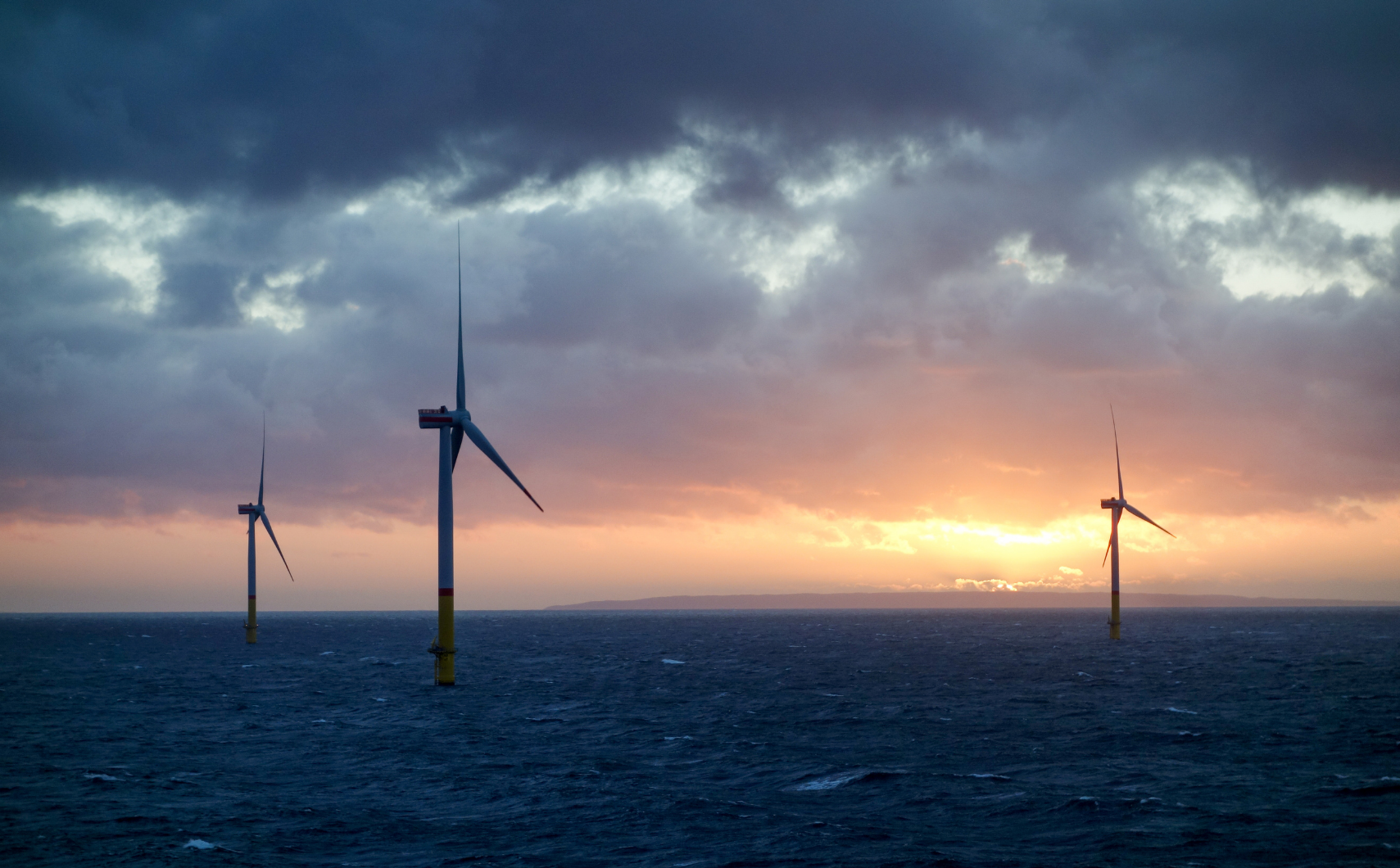
The next phase in the development of the renewable industry may just be about to occur. The Australian Energy Market Operator (AEMO) have been studying locations for new renewable developments. The majority of the market has been focusing on Renewable Energy Zones (REZ) on land but the solution maybe further off ashore. AEMO have located four offshore wind zones off the coast of NSW, Victoria, and Tasmania. The potential opportunities could add up to 40GW into the grid. To keep transmission costs down, AEMO have found locations close to land where significant ports are established that will allow the renewable output for the wind farms to be used at renewable hydrogen export hubs.

This year, AEMO updated its inputs into the Integrated System Plan and one of the significant changes from previous years is the volume of offshore wind availability. The 40GW identified is likely to be constructed over the next 20 years. At this stage the only offshore wind farm is the Star of the South wind farm located off the coast of Victoria and is likely to be 2,200MW. The Start of the South project is likely to connect into the grid via the Latrobe Valley and will feed in electricity as the coal fired generation in that region retires.

As the Hydrogen market also grows, offshore wind developers will focus on sites adjacent to the proposed hydrogen export facilities around Newcastle.

Offshore wind developers are concerned the legislation hurdles may stall the industry, so they are looking for support from governments to allow the industry to grow.

Oceanex Energy is looking to develop and construct up to 4 offshore windfarms off the coast of NSW with output likely to be over 7,000MW.

Oceanex Energy CEO Andy Evans says the clarity over the legislation is important given that project developers would likely need to spend up to $200 million to get a project to financial close.

He said it was an industry that would be likely dominated by major energy players – such as RWE, Iberdrola, Macquarie, and Equinox, along with big oil companies such as Shell and BP that are also expanding into offshore wind.

ALL COAL FIRED GENERATORS SUPPORT KEEPING COAL ONLINE

On Thursday last week, Australia’s largest energy company released its annual report. The 192-page document contains a lot of information but not a lot of good news for investors. One of the sections is titled “a year of continued evolution”, first there was the planned demerger, then the exit of its CEO following the demerger announcement, now to cap it off the news of on-going challenging market and operating conditions due to declining wholesale electricity prices.
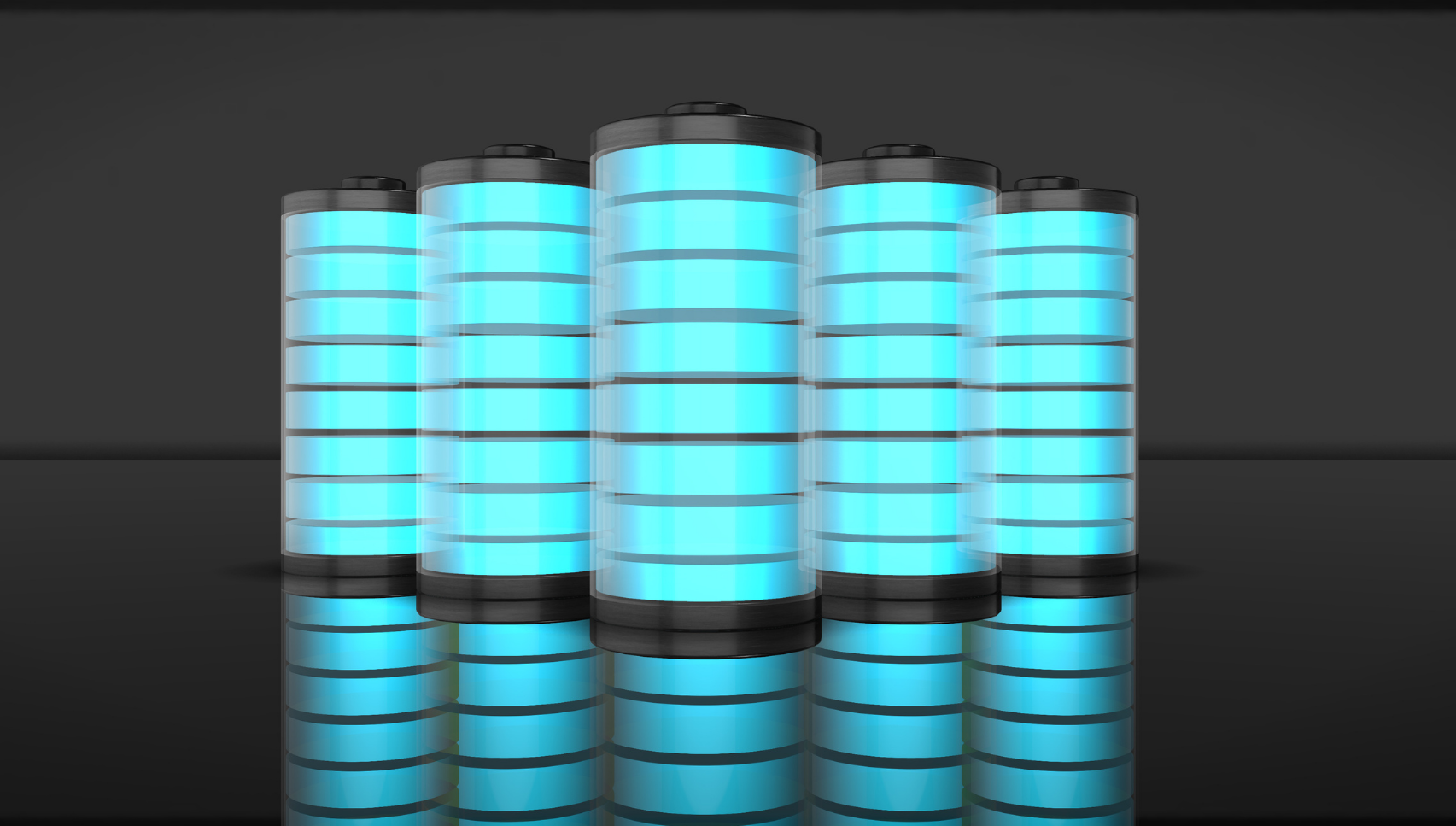


The FY21 financial results demonstrate the huge reliance AGL has on the wholesale electricity market with profits dropping 33.5% to $537M. These results have not been favourable for investors with dividends also down to $0.75 per share.

Revenue from consumer customers increased 1.1% thanks to an increase in customer numbers but large business customers revenue fell by 12.4% because of COVID related consumption drops and finally there was a drop of 4.6% for wholesale customer revenue driven by lower volumes and lower prices.

With the restructure of the business, AGL is looking to lead into a new future. Part of the new future is the decarbonising of the business and the move towards renewables.

AGL Energy CEO has called for a national plan to phase out coal fired generation to protect consumers and jobs if the energy transition falls into chaos.

The concern for the industry is that events like the Callide C4 turbine failure or the flooding of the Yallourn mine could trigger price shocks and blackouts. Other concerns include the increased penetration of cheap renewable energy and batteries that will make coal fired generation uneconomic, leading to early retirement.

AGLs idea has been endorsed by the majority of companies with coal fired generation assets. The Energy Security Board (ESB) has also flagged a scheme may be required to enable the orderly retirement of assets while keeping the grid stable.

AGLs CEO said “a plan is needed that goes beyond the reforms proposed for the National Electricity Market to give certainty to industry, investors, consumers and others about the pathway towards the eventual shutdown of plants”. This is something that would work in Queensland that has historically been reluctant to announce the early retirement of power station following the impact on regional jobs.

Alinta’s CEO has supported the AGL idea. Alinta operates Loy Yang power station which supplies a large quantity of baseload electricity in Victoria.

Origin’s CEO also supports the plan, saying they want to avoid a messy transition to low carbon energy.

We all agree a transition plan to reach renewable energy and emission targets is useful for owners and operators of coal fired generation to manage the life of their plant, but we must remember the owners of these assets are ultimately responsible for the utilisation of their assets. If they are under financial pressure and the units are becoming uneconomic, they can notify the market and retire the units or simply mothball the units.

Apart from sudden shocks to the market like what occurred following the Callide failure, other units in the generation mix pick up the difference very quickly. If the market is working correctly, the lowest cost solution is always found.

The Energy Security Board is working on plan to transition to a low carbon market to alleviate the concerns of generators with other enhancements including a two-way market to benefit consumers.

It is understood the ESB is developing a strategic reserve mechanism for generators to ensure adequate supply and certainty of available capacity. This mechanism will include capacity payments for dispatchable generation to supply the much need system security service they provide rather than just the electricity they generate.

With increased pressure on the federal government to reduce emissions to meet net zero by 2050, coal will need to make room for renewable energy. The question is, should coal generation be pushed out based on economics or should the industry and ultimately end users’ subsidies the coal generators to keep the lights.

LIQUID BATTERY

Is metal battery technology the next game changer? Bill Gates has put some of his money behind the concept supporting a Massachusetts company to commercialise and grow its long duration energy storage systems.

Ambri has obtained $196M in funding from its largest shareholder, Bill Gates with Reliance Industries Limited from India and various other institutions including a Japanese Energy Fund.

Currently Ambri’s batteries have capacities of between 400kWh and 1,000kWh. 250kW batteries can provide storage from 4 to 24 hours.

Liquid metal batteries are constructed of a liquid calcium alloy anode, a molten salt electrolyte, and a cathode comprised of solid particles of antimony. The material used in the construction are relatively low cost and easy to assemble keeping the overall price down.

Ambri claim calcium and antimony electrodes are less than one third the cost of lithium, nickel, manganese, and cobalt currently used in lithium-ion batteries.

The new battery technology is also likely to last 20 years with very little performance degradation over time.

Batteries are likely to cost up to 50% less than equivalent lithium-ion systems from 2022 to 2030.

The longer-term plan for Ambri is to construct high volume manufacturing facilities in the United States and globally while in the short-term Reliance New Energy Solar will develop and manufacture the batteries in India.

5 MINUTE SETTLEMENT DELAYS

AEMO have submitted a contingency plan to the Australian Energy Market Commission (AEMC) for consideration. Although AEMO is on track to meet the planned 1 October start date, it has submitted a rule change request as a precautionary measure.

The 5-minute settlement is a major market reform that brings 5-minute settlement in line with 5-minute dispatch. From 1 October 2021, the electricity spot market will settle every 5 minutes rather than in 30-minute intervals where it currently occurs. The changes to the market have impacted many parts of the electricity sector including generators, retailers, and network providers. This has resulted in new systems being implemented to accommodate the changes.

The AEMC has been asked to rule on a proposed contingency plan to account for an event where there is a delay to the implementation of 5-minute settlement resulting from late issues occurring with major IT change projects.

AEMC has prioritised this request because going live with 5-minute settlement before AEMO or industry can meet essential capability requirements would be a threat to the market.

AEMO will advise the market by the 1st of September if there is any cause for delays. If delays are not flagged, a new rule will not be made, and the 5-minute market will go live on 1 October. AEMO will consult with industry on the impact of AEMO’s three proposed alternate start dates. The final ruling will be live by 30 September if a change is required.

AEMO has identified two scenarios under the contingency plan. The first option is a short delay until 1st December 2021, and the second and third options are longer delays until either 1st February or 1st April 2022.

As the implementation of the 5-minute market required changes to the national electricity rules (NER), any changes to these rules, because of different start dates due to delays needs to be approved through the AEMCs rule change process.

The impact of these delays has a knock-on effect for different parts of the industry, the Commission noted that any new start date could change the timetable for other, linked reforms and affect existing market contracts for 5-minute settlement. The commission will make a decision on proposed alternative start dates with that in mind.

The AEMC have asked for submissions to the rule change request and will be open until 2 September.  A public forum on the issue will be held on 9 August.

AEMO TO FASTTRACK TO NET ZERO EMMISSIONS


On Friday, the Australian Energy Market Operator (AEMO) published its 2021 Inputs, Assumption and Scenarios Report (IASR) which includes five scenario’s which may take the industry into the future. The five scenarios range from the slow change where not much happens in relation to technology changes and the existing generation mix right through to the Hydrogen superpower where changes in technology make huge advancements. The scenarios outlined in the IASR will form part of the 2022 Integrated System Plan (ISP).

AEMO have spent the last 10 months working with industry, governments, and consumers to build the scenarios. During consultation, most stakeholders supported the rapid decarbonisation scenarios leading to achieving net-zero emissions.

Compared to the input to the 2020 ISP, the 2022 ISP will include economy wide decarbonisation not just across the electricity sector and increased investment in distributed energy resources. To model decarbonisation across the economy, the 2022 ISP will include scenarios of electrification across industry and the transport sector.

To understand how the market moves to a lower carbon world, AEMO have modelled a ‘steady progress’ scenario and a ‘net zero’ scenario. The steady progress scenario employs existing government policy including emission abatement targets and a steady growth in the uptake of PV. In the Net-zero scenario the change in the electricity industry is driven by technology led emission abatement and progressive tightening of emissions targets leading to net zero emission by 2050.

AEMO have also modelled a ‘Hydrogen superpower’ scenario where the market is structured to support the development of a renewable hydrogen export economy.

A draft ISP will be published in December with the final ISP released in June 2022.

THE EDGE ENERGY MANAGEMENT SYSTEM

Edge has invested heavily in bespoke infrastructure and specialised personnel to develop systems that allow Edge to receive data electronically and process that data for analysis, forecasting, reporting and snapshots. The ability to store and receive data with immediacy means we can supply data to you directly or via our online portal, EdgeLIVE.

ONLINE PORTAL – EDGELIVE

EdgeLIVE is a secure cloud-based information portal that gives you instant access to contracts, portfolio information, reports, data and so much more. The portal provides you with the information you need to make informed choices regarding your energy portfolio.

EdgeLive allows you to use interactive graphical dashboards to view your consumption and costs. The functionality of the dashboard allows you to drill down to specific sites, regions, or filter the data to specific criteria that is important to you.

THE EDGE ENERGY MANAGEMENT SYSTEM (TEEMS)

Edge has built bespoke proprietary in-house systems to efficiently and effectively manage the entire portfolio.

TEEMS also ensures we meet the highest quality standards expected not only by ourselves, but as required under our QMS and ISO certification.

TEEMs is utilised as follows:

  • storing details relating to your energy portfolio, down to individual site details such as tariffs and rates;
  • validation of meter data, ensuring that any data received through our FTP servers is qualified (actual / substitute / missing), and data quality issues are raised with relevant meter providers / data agents to ensure timely resolution;
  • receipt, calculation, and reconciliation of invoices – with site costs calculated from first principals efficiently and accurately (as per TEEMS’ billing engine capability);
  • calculation of accrual and cash call reporting (on any day) – with month-to-date actual data extrapolated to full month data sets for accurate forecasting;
  • calculation of snapshot reporting (budgets) – marked-to-market each day;
  • distribution of all reporting;
  • logging of all contracting recommendations for each client portfolio and reasons for recommendations to be progressed or not (this includes all recommendations to buy or hold in scheduled weekly or monthly reporting);
  • capturing of all deals, to ensure adequate tracking of deals and associated documentation, and to ensure all account and portfolio management reporting is from a single data source with portfolios accurately marked-to-market each day.

If you would like to view a demonstration of EdgeLIVE please email us and a demonstration user log in can be sent to you.

E: save@edgeutilities.com.au or P:1800 334 336


3 MISCONCEPTIONS ABOUT ENERGY BROKERS

Securing the best Energy Deal for your business should be one of the easiest things to do in a business, right? Wrong! Without the right guidance and information, it can also be one of the costliest.

A simple way to reduce the stress and increase your chances of locking yourself into the wrong deal is to reach out and sort the help of an Energy Broker. Not only will they save you time and energy, but they’ll also get you the best deal for your business.

Despite this, many people are still under the misconception that if something sounds too good to be true, it probably is. We’ve picked the top three misconceptions about Energy Brokers.

  1. Are Energy Brokers expensive?

Simple answer, nope.

This is probably the biggest mix-up out there. Energy Brokers help you at their own expense and are free for businesses like yours.

Most Energy brokers are paid a commission. At Edge Utilities, we earn between 1% – 2.5% on the energy component, paid by your chosen retailer, should you wish to contract with them.

If you decide not to contract, we don’t get paid. No deal. No pay!

  1. Do Energy Brokers act in your best interests?

You may be wondering… if an Energy Broker is free and gets commission, won’t they just go with their favourite retailers for the highest commission?

It’s easy to see how this could happen… and yes, it does happen! If a retailer is offering more commission, it seems obvious which deal, they would recommend, right?

This isn’t the case at Edge Utilities. Our biggest interest is to help a business owner choose a contract that’s right for them. What would you think would happen if the business is unhappy with their bill when they receive it?

They’ll go elsewhere and let other business around them know. Consequently, so does the commission. So, keeping everyone happy for as long as possible is the goal for Edge Utilities.

  1. Wouldn’t a retailer prefer working with the individual over a broker?

Not necessarily! A broker will assess your contracts and find a retailer with T&Cs to match your business needs. We do all the leg work and will also ensure all documents are filled out correctly, so you can do what you do best.

Another thing to remember is that most retailers love Energy Brokers. Paying a broker’s commission to bring in customers is a lot cheaper than paying employees to develop business.

Edge Utilities works for you

We will offer expertise, access to many options, and the ability to negotiate the best rates. Our job is to ensure your timing to enter a retail contract considers the underlying markets that ultimately drive your costs (which we analyse daily), to ensure you don’t end up on penalty rates, and to go to market to get you the best deal on the day we both decide to do that.

And did you know, we can also invoice?

Now is a good time to talk about your current agreements and if you have other sites that need this attention, don’t hesitate to reach out.

Call us on 1800 334 336 or email save@edgeutilties.com.au

ORIGIN STILL IN THE RED

More bad news for electricity retailers with Origin Energy announcing an impairment of $1.6B after further writing down the value of its generation assets and reducing the value of its renewable energy contracts.

In a statement, Origin said the write downs were a result of falling wholesale prices, mostly driven by the influx of new wind and solar projects. High gas prices also reduced the returns from their fleet of gas-powered generation.

Origin owns the largest coal fired generation unit in the NEM, so the market pressures weighed heavily on the balance sheet. Origins large exposure to the non-renewable segment of the market through its Eraring coal fired power station which resulted in a $583M post-tax impairment. This comes because of Origin’s assumption of a lower outlook for wholesale electricity prices driven by new supply expected to come online, including both renewable and dispatchable capacity, impacting the valuation of the generation fleet, particularly Eraring Power Station.

Eraring is expected to be the cause of much of the impairment, but the gas-powered generation (GPG) units did not fair much better. The GPG were affected due to the increased cost of gas and the decrease in the spot and contract electricity market price.
Strategically Origin has chosen to source renewable energy through PPA rather than build physical generation so are not exposed to the physical renewable market. Origin was an early mover in the renewable PPA space so the PPA’s on their books are very expensive compared to what the market offers are today. This has resulted in Origin writing down some of the value of these existing PPAs.

Origin says it will write down $995M in value of goodwill for these renewable PPA’s and the gas contracts that are out of the money. Origin expects the spot market price to be up to $20/MWh below where they previously anticipated the price to be.

Origin expect their FY2022 profits to be lower than expected at $450- 600M which will again be largely supported by the LNG export part of the business.

On a positive front, Origin expects the market to recover in FY2023 where earnings are expected to increase by $150-250M on the back of a material rebound in energy market earnings.

NEM BACK IN BLACK

On Wednesday last week the Energy Security Board (ESB) released a statement outlining that they had finalised advice on the redesign of the national electricity market (NEM) and handed the report to the Energy National Cabinet Reform Committee. This advice comes from a 2019 request to redesign the market to support the orderly transition to a modern energy system that allowed a rapid increase in the growth of large and small scale renewable energy.

Details of the advice is not publicly available but wording in the media release indicates that coal fired generation will play a key role in the transition. The statement outlines that there must be a coordination of the exit of aging coal fueled generation to maximise the opportunities and minimise risks associated with the transition to deliver affordable, smart, and clean energy.

The ESB consulted widely with industry stakeholders, conChanges to the generation mixsumer bodies, academics, government bodies and interested parties over the last two years. An options paper was released in April and the final advice is expected to closely reflect the options discussed.

Key areas we expect to be tackled in the final redesign advice is preparing for the older coal fired generation retirement, backing up power system security, unlocking benefits and opening the grid to cheaper large-scale renewables.

In preparing for the retirement of the older coal fired generation, the ESB want to give an incentive for the right mix of resources including renewables and non-renewable generation. This was to restore confidence in consumers that energy will be available when required and the mix will include intermittent generation like wind and solar as well as firm dispatchable generation like gas.

To tackle the need for a more secure power system, the ESB will require different ancillary services like inertia, voltage, and frequency control. A market for these services will be required to ensure the procurement and dispatch of these services save money while keeping the network electrically secure.

Further work will also include unlocking the benefits for all energy consumers to gain the advantages of rooftop solar PV, batteries, and smart appliances. Improvement in these areas may also include how consumers source their energy.

As generation is only part of the equation the need to reform the way electricity is transported is also a key redesign topic. Upgrading the network with the construction of transmission lines will reduce congestion and allow cheaper generation to be built in regional areas and improve the diversification of the grid by opening up more geographic locations.

The question most end users are asking is who is paying for all these improvements. As usual the end user will pay. The ESB is understood to be recommending capacity payments for electricity generators to remain online. These generators are likely to be the older coal fleet so consumers will be paying to keep higher carbon intensive technologies online rather than supporting renewables.

This situation will pay generators an available payment to generate when required. In reality, these units will not generate unless the market is at the point of load shedding.

Capacity payments are used in the Western Australian electricity market, under their current arrangements, generators receive capacity credits in line with their units generating capacity.

In the NEM if capacity payments are introduced, they will essentially offset the Reliability and Emergency Reserve Trader (RERT) costs currently used to provide a similar service.

EDGE NEWS – JULY NEWSLETTER

In this issue we look at the following;

  • We recently contracted 3 of Brisbane’s Largest Towers. How do we do it?
  • What is causing the increase in the spot &futures market prices?
  • What is aggregated electricity procurement and should you do it?

National NAIDOC week was celebrated during July and Edge acknowledge the Turral and Yuggera peoples as the traditional owners of the land on which our offices sit. We pay respect to elders past, present and future.