CHANGES TO THE GENERATION MIX

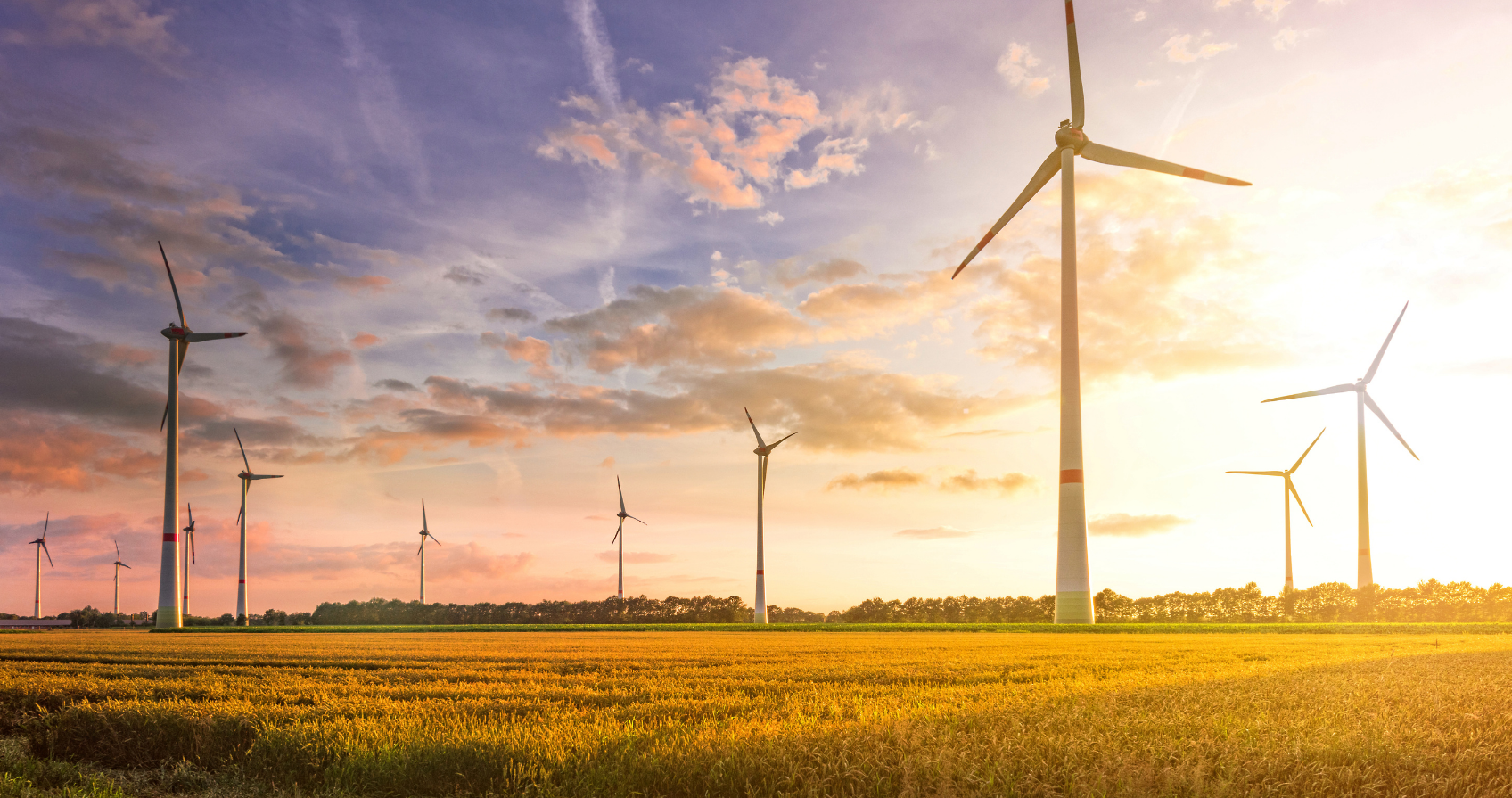
Last Tuesday saw a new record set for wind powered generation with NEM wide production reaching 5,899MW late in the afternoon. Wind made up 20% of the total generation at the time and on occasion peaked to 26% of NEM wide generation. As seen from my market commentary in recent weeks we have seen large fluctuations in available generation from intermittent sources such as wind and solar. In the past 6 months although peak wind production reached 26% it has also reached a low of just 2%. As more wind farms come online and are built across different regions, we will see more diversification of output. Currently Victoria leads the pack with the most wind generation followed by NSW and SA with TAS and QLD only contributing small amounts of wind generation.
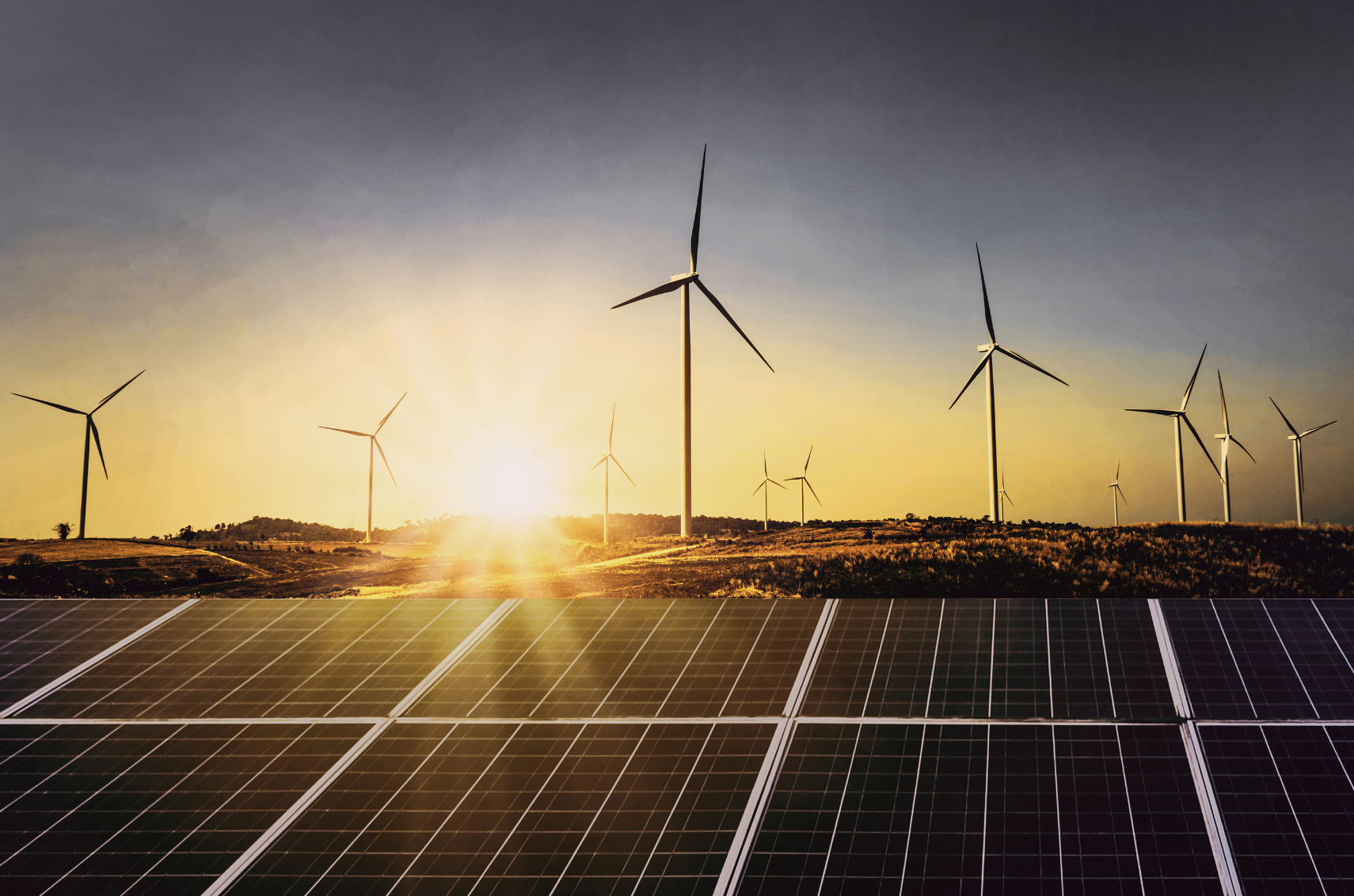
In line with the increase in renewable generation, last year operational demand increased by 350MW primarily driven by cooler Q2 conditions and the opening up of the economy following the Covid lockdowns the previous year. LNG export prices have also increased as the world economy improved, this led to an increase demand in QLD for electricity in the gas production value chain. Overall wind and solar generation have reached record highs peaking at 57% market share in April.

Although the average operational demand has grown, the increased penetration of roof top PV reduced demand by 298MW between 10:00 and 14:30. Generation from intermittent sources such as wind and solar reached a record 7,368MW in the second quarter, 457MW more than the same quarter a year ago.

Coal fired generation dropped for a few reasons over the quarter, initially coal generation was being offset by renewable generation then interruptions in coal supply and unit failure lowered production.

The largest contributors to these reductions where Victoria’s Yallourn power station where flooding in the neighbouring mine reduced the output and a catastrophic failure at Queensland’s Callide C4. Following the failure of Callide C4, network protection took out a significant amount of coal units over the next couple of hours while the network was reinstated to isolate Callide power station. As a precaution the undamaged coal fired units at Callide remained offline for the following weeks while the cause of the initial failure was investigated.

With low and sometimes negative prices during the day due to high levels of rooftop PV, large scale solar and wind, the remaining generators tried to extract value from the morning and evening peaks. Historically this would have been taken up by coal fired generation but in Q2 gas powered generation (GPG) operated more due to the scarcity of coal fired units.

A record amount of 57% renewable generation occurred at 11:30 on 11th April, this was made be solar, roof top PV, hydro, and biomass, and was 1% more than the previous record seen in October 2020.

Although renewable generation has been high, restrictions on the network are limiting further output. Curtailment occurred for about 4% of semi-scheduled intermittent generation which was higher than Q1 primarily due to higher negative prices. Intermittent generation now their output at times of negative pricing to limit their exposure to the market. We also see an increase in the amount of curtailment resulting from network congestion and network constraints. In regions with very high levels of renewable penetration such as South Australia saw intermittent generation curtailed to manage AEMOs System strength concerns.


BRISBANE BASED BUSINESS CHARGING AHEAD

Currently Lithium-ion batteries provide various benefits over conventional batteries including charge time and weight. Li-S Energy is hoping to use lithium sulphur batteries which have a longer life, higher energy density and are even lighter than Lithium-ion batteries.

Lithium sulphur batteries can be cycled 600 cycles which is more than the current batteries. Advancement in this technology comes as a result of a joint venture between Deakin University and BNNT Technologies. Deakin University researched boron nitride nanotubes (BNNTs) which are pivotal to the advancement. Through the joint venture, BNNT Technologies will manufacturing the batteries.

BNNTs were only discovered in 1995, they are a very tough material comprising of nanotubes of Carbon, Nitrogen and Boron atoms. Until recently the challenge for these products was to develop them outside the lab and reduce the cost for them to be made.

The cost to produce the BNNT has been around $1M per kilogram, now the BNNT manufacturing facility at Deakin University’s Geelong campus has been setup to produce 50kg of BNNT per year per manufacturing module per shift.

The lithium-ion battery market is worth about $47.5 billion and is expected to double by 2025. A representative of the company would not state how many batteries could be made each year but believes the batteries would be competitive with other lithium-ion batteries.

Reducing the weight of batteries is crucial to the long-term success of EV’s and other devices. Li-S Energy believe removing the heavy elements that are in a lithium-ion batteries and are not required in lithium sulphur batteries will make the lithium sulphur battery very cost competitive considering the higher energy density.

Li-S Energy is expected to be listed on the ASX in August with an expected market cap of $544 million.

CHINA LAUNCHED NATIONAL CARBON EMISSIONS TRADING SCHEME (ETS)

Six years after the establishment of the scheme was pledged at the end of 2015, China has begun operating the national carbon Emissions Trading Scheme (ETS). This started on 16th July 2021, with the opening price of the Carbon Emission Allowances (CEAs) reported at CNY 48 (AUD 10.01) per ton. The first trading day concluded with the closing price of CNY 51.23 (AUD 10.68) per ton, up 6.7%. The total trading volume reached 4.1 million tons at CNY 210 million (AUD 43.79 million).
Shanghai Environment and Energy Exchange (SEEE) will handle account openings for traders and the operations of the new trading platform until a formal national carbon emissions quota trading operator is set up at a later stage. Trading in carbon emissions takes place from 9.30am to 11.30am, and from 1.00pm to 3.00pm Monday to Friday, much like the markets in Shanghai and Shenzhen. The national ETS initially set daily trading limits at 10% of prices and limits for block deals will be set at 30% of price moves.

According to ICAP, the ETS regulates more than 2,200 companies from the power sector, which emit more than 26,000 tCO2 per year. Its scope is expected to be expanded in the future. Currently, the ETS is intensity-based, with the cap being adjusted ex post, based on actual production levels. The compliance obligations are also limited.

While the new ETS is a part of China’s plans to make use of “market mechanisms” to help bring its carbon emissions – now the world’s highest – to a peak before 2030 and to achieve carbon neutrality by 2060. Critics have questioned its effectiveness due to its benchmark-based design, limited coverage, and the lack for a firm cap on emissions.

MINING EXEC JOINS RENEWABLE AGENCY

Scott Morrison and his Minister for Energy and Emissions Reduction continue to appoint mining executives to the Australian Renewable Energy Agency (ARENA). The next to be appointed is Stephen McIntosh from Rio Tinto. Fellow board member John Hirjee is also a former Rio Tinto executive.

As Rio Tinto is one of Australia’s largest coal producers, opponents to the appointments find it hard to understand how these executives can add value to the ARENA board.

However, Minister Angus Taylor said “that the addition of McIntosh would bring to the ARENA board experience in the production of the materials used in clean energy technologies like electric vehicles and battery storage”.

Taylor went on to say “Mr McIntosh is a former Rio Tinto Group Executive with experience in green metals, wind, solar and batteries. He has also worked across hydrogen and carbon capture technologies during his time with the company.”

Darren Miller, the CEO of ARENA, has had his contract extended for another three-year term and will work with other senior staff and board members to provide funding into the development of new clean energy technologies.

Questions have been raised about if ARENA is distributing its funding fairly with Rio Tinto awarded funding for a feasibility study into the use of Hydrogen at its Yarwun alumina refinery and the funding of the Kidston pumped Hydro project where renewable projects in the region were rejected.

BILLION DOLLAR GREEN ENERGY HUB

Spark Infrastructure, the partial owner of SA Power Networks, Transgrid, Powercor, CitiPower and the Bomen Solar farms is looking at developing a 2.5GW renewable energy hub in the middle of the South West Renewable Energy Zone (REZ) in NSW.

The Dinawan Energy Hub is strategically situated along the route of the planned interconnector between South Australia and NSW. The EnergyConnect project will be a 330KV interconnector running between Wagga Wagga and Robertstown in South Australia and will open up more than $20B of new renewables projects.

The Dinawan Energy Hub will be located halfway between Coleambally and Jerilderie and due to its location will support the existing network and the Humelink and Karanglink interconnectors.

The hub is expected to be completed by 2025 and is expected to include 1GW of wind, solar and battery storage. The $1.5B project will be undertaken in stages with the first stage expected to

commence construction in 2024.

Spark Infrastructure have completed the project identification stage of the development and now will undertake engineering studies and community consultation. The final investment decision is expected in 2024.

In some ways the Dinawan Energy Hub will compete with the NSW government’s plans to develop the REZ however Spark infrastructure believe the REZ and the energy hub can be developed together.

Spark Infrastructure is also in the news with a potential takeover bid for the multi-billion-dollar business.

Leading global investors including Kohlberg Kravis Roberts (KKR) and Ontario Teachers’ Pension fund have showed interest in investing in renewable energy and infrastructure projects in Australia.

It is understood these investors are looking at investing $5B to take over Spark Infrastructure.

If the takeover goes to plan, KKR and Ontario Teachers’ Pension Plan may add the Australian market to their target markets having recently bought a stake in Finland’s largest electricity distributor. KKR is also in the process of buying John Laing, a developer with interest in renewables assets in Australia.

AGL DEMERGER

Last week AGL shared its plans to split the existing business into two. The announcement on Wednesday was not taken well by investors as shares dropped 10% when chairman Peter Botten made the announcement. The share price continued to fall through the week closing on Friday at $8.13 well below the $17.72 price a year ago. Investors are concerned that the two entities will lack the financial capacity to grow the businesses.

Accel, the coal fired part of the business will be led by current AGL CEO Graeme Hunt while Christine Corbett will run the retail business. Accel will earn its returns from carbon intense assets so institutional investors are steering clear of the business, Accel will also retain a 15-20% ownership of AGL Australia. Apart from a lower share price pushing investors away, it is also expected dividends will continue to fall for the 2022 financial year. AGLs retail business will retain the clean energy assets and the retail business.

The previous CEO of AGL Brett Redman proposed the demerger to evolve the business in a rapidly changing marketplace. Prior to the demerger AGL had consolidated to form a vertically integrated business, this worked well over recent years however the business structure is no longer optimal.

Customers are after a cleaner alternative to coal fired generation so the retail business that will retain the customers will be merged with the carbon neutral portfolio of assets resulting in customers sourcing their power from cleaner green generation sources.

While AGLs demerger does not seem to be seen by investors as a positive direction, Edge has previously highlighted that the splitting up of generation businesses is gaining momentum overseas with many fossils fuelled businesses creating businesses to develop a green focus and meet the customers’ demands. Time will tell if the demerge strategy will benefit to AGL.

Despite the negative outlook for Accel with its fleet of coal fired assets there is a positive light at the end of the tunnel. As the existing coal fired assets are retired Accel will retain their key location on the grid. Their favourable locations on the grid will allow Accel to transform the connection points from a high carbon emitting locations to low carbon hubs as new cleaner generation and storage is installed.

Edge News – June 2021 Newsletter

As we head into a new financial year consider the usual activities at this time of year. Consumers on financial year contracts would (should!) be recontracted by now, leading to a temporary decrease in demand for forward contracts from a consumer perspective. Wholesale contract traders will be squaring away positions for financial year end, so we should expect some profit taking from those in long positions and vice versa!

One thing we all know with contracting energy… timing is everything!  Edge2020 clients provide tips on how to contract better.

We’ve been working with some amazing clients these past couple of months, and we highlight one in particular who was an absolute pleasure to work with (and who we helped save nearly half a million dollars).

We also review Callide – what happened and what now?

COAL FIRED GENERATION SHUT DOWN

Just weeks after the evacuation of Callide Power Station we have seen another thermal power station evacuated and units shut down.

Yallourn is the latest coal fired power station to be taken offline as it has been impacted by the flooding in Gippsland’s Latrobe Valley. The flooding has stopped production at the Yallourn Coal mine. The power station, operated by Energy Australia, has been operating at minimum level to conserve coal and this will continue until coal production resumes.

Part of the coal conservation strategy has been to shut down units and operate the remaining unit at minimum levels. This is not the first time Yallourn has been impacted by flooding. In 2012 the nearby Latrobe River broke its banks and water flowed into the mine shutting down operations for weeks.

Unlike the situation we had in Queensland a few weeks ago, there was no need for load shedding.  AEMO made a statement outlining there was no supply problem in Victoria. The six remaining coal fired units at Loy Yang remain online and not materially impacted by the flooding.

As occurred in Queensland, other generators filled the supply gap, Newport Gas fired station ramped up as Yallourn shut down units. Jeeralang power station operated at full capacity over the following evening peaks after the Yallourn units were taken offline and other units adjusted their bids to generate more if required.

Similarly, to the Queensland event, when the thermal units were taken offline there was insufficient renewable generation to fill the gap resulting in gas powered generation filling the shortfall.

RENEWABLE ENERGY ON WOOLWORTH’S SHOPPING LIST

Woolworths have signed a 10-year agreement to purchase electricity from the Bango Wind Farm. The new 82.8MW wind farm is located in New South Wales near the town of Yass.

The output from the wind farm will cover about 30% of Woolworths NSW electricity needs which will be used to provide renewable energy for 108 supermarkets and offset 158,000t of emissions each year.

The project being developed by CWP Renewables is expected to commence supplying electricity under the PPA in January 2022.

Woolworths has a target to move to 100% renewable electricity by 2025 as part of its larger ambitions to become carbon neutral and then take more carbon out of the atmosphere than they produce by 2050.

Woolworths operate in an energy intensive sector with supermarkets consuming large quantities of electricity. They implemented strategies to use their scale to benefit the community and the environment. Woolworths prioritise their support for new renewable energy project builds which invest in renewable energy while also supporting jobs in regional areas.

The Woolworths Group accounts for around one per cent of Australia’s total energy use. Woolworths continues options to invest in more renewable projects and is also looking to partner with energy retailers on new build renewable projects. Woolworth procurement strategy will assist in accelerating the availability and affordability of renewable energy for all Australian households and businesses as it continues its target to converts to 100% renewable sources by 2025.

The 100% renewable energy target by 2025 will support Woolworths’s transition to its carbon reduction target of 63 per cent by 2030.

Apart from the use of renewable energy in its supermarkets, Woolworths have also reduced its carbon footprint by around 25% by using energy efficiency initiatives such as converting its supermarket lighting to LEDs and optimising its air conditioning and refrigeration systems.

Edge News – May 2021 Newsletter

Electricity prices are market driven, and markets respond to price drivers. Too high, respond with action that drives them lower. Too low, respond with action that makes them higher. Sounds simple yes? Add in policy uncertainty, ongoing network capacity issues, and a genuine sustainability movement, and it’s not that simple at all.

We look at Q1 2021 electricity prices. Why they did what they did. What the real drivers are. Where they can go in 2021, and beyond.

We also look at Sustainability. In as little as 12 months it feels like we’ve seen Sustainability go from a compulsory annual report to a real movement with real action and actual commitments.